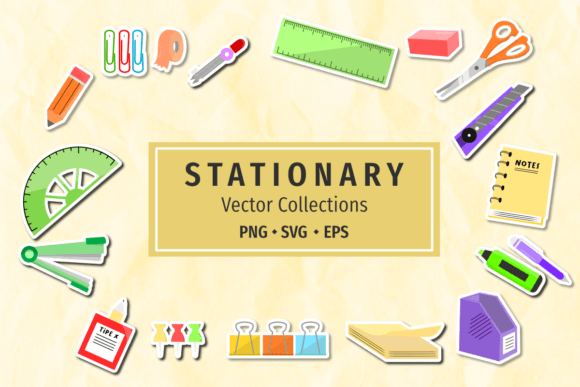
Stationary Vector Collections: A Strategic Approach to Elevating Brand Identity
In the landscape of modern business communication, visual consistency is not merely an aesthetic preference; it is a strategic asset. For entrepreneurs, marketers, and professionals aged 20 to 50, the distinction between amateur and expert execution often lies in the details. This is where Stationary Vector Collections enters the conversation as a critical tool for operational excellence and brand cohesion. Far from being a simple repository of clip art, this comprehensive collection offers high-quality vector graphics designed to streamline the design process while maintaining a professional standard that resonates with target audiences.
The term "stationery" in this context extends beyond physical paper goods. It encompasses the digital and tangible touchpoints through which a brand communicates its identity. Whether you are designing a letterhead for a B2B consultancy, an invitation for a high-end event, or a social media graphic for a startup launch, the underlying need remains the same: clarity, elegance, and scalability. By leveraging a curated library like Stationary Vector Collections, designers and decision-makers can reduce friction in their creative workflows, ensuring that every output aligns with established brand guidelines without reinventing the wheel for every project.
The Strategic Value of Scalable Graphics
At the core of Stationary Vector Collections is the technical advantage of vector-based formatting. Unlike raster images (such as JPEGs or PNGs) that pixelate when enlarged, vectors maintain crisp edges and clarity at any scale. This capability is essential for professionals who must deliver assets across diverse mediums—from a tiny favicon on a website to a large-format banner at a trade show. The collection’s support for multiple formats, including EPS, SVG, and PNG, ensures compatibility with industry-standard software like Adobe Illustrator, InDesign, and Affinity Designer, as well as web development environments.
From a planning perspective, adopting a vector-first approach reduces long-term costs. When a logo or decorative element needs to be resized for a new marketing campaign, having the original vector file eliminates the need for expensive redesigns or low-resolution compromises. This efficiency allows teams to pivot quickly in response to market changes, a crucial factor for small business owners and agile marketing teams. Furthermore, the variety of designs available—from classic serif motifs to modern minimalist icons—provides the flexibility to adapt visual language to different brand voices without sacrificing quality.
Aligning Design with Business Goals
Effective stationery design is never arbitrary; it serves specific communication objectives. Stationary Vector Collections supports this intentionality by offering categorized assets that can be mapped directly to business goals. For instance, a financial firm seeking to convey trust and stability might select elements from the "classic and elegant" subset, utilizing heavy borders, traditional flourishes, and muted color palettes. Conversely, a tech startup aiming to appear innovative and approachable might opt for the "modern and trendy" selections, featuring clean lines, geometric shapes, and vibrant accents.
Consider the scenario of a freelance consultant preparing a proposal package. The use of consistent, high-quality vector elements in headers, footers, and dividers creates a cohesive narrative. It signals attention to detail and professionalism, subtly reinforcing the value proposition before the client even reads the content. Similarly, educators and publishers can utilize these collections to create engaging educational materials or newsletters that capture reader interest without overwhelming them with clutter. The key is to view these graphics not as decorations, but as structural components of your communication strategy.
Enhancing Customer Experience Through Consistency
Customer experience (CX) is heavily influenced by first impressions. When a customer receives a branded invoice, a thank-you note, or a digital newsletter, they subconsciously evaluate the brand based on visual cues. Inconsistencies—such as blurry logos, mismatched fonts, or generic stock imagery—can erode trust. Stationary Vector Collections mitigates this risk by providing a unified library of assets that ensure visual harmony across all touchpoints. By integrating these vectors into your design system, you create a predictable and polished user journey, which is vital for building long-term loyalty.
- Brand Recall: Repeated exposure to consistent visual elements strengthens memory retention.
- Perceived Value: High-quality graphics elevate the perceived worth of products and services.
- Professional Credibility: Polished designs signal competence and reliability to potential clients.
Practical Applications Across Industries
The versatility of Stationary Vector Collections makes it applicable across a wide spectrum of professions. Below are practical examples of how different roles can integrate these assets into their daily operations:
- Entrepreneurs and Small Business Owners: Use vector templates for business cards, pitch decks, and email signatures. This ensures that even with limited design resources, the brand maintains a premium look.
- Marketers and Content Creators: Incorporate vector icons and backgrounds into blog posts, social media graphics, and ad creatives. This speeds up production time while keeping visuals aligned with current trends.
- Event Planners: Utilize elegant vector borders and ornamental designs for invitations, programs, and signage. The ability to scale these elements ensures they look sharp on both digital invites and printed materials.
- Educators and Trainers: Create visually appealing worksheets, certificates, and presentation slides. Vector graphics remain clear whether projected on a large screen or printed in black and white.
- Freelancers and Agencies: Offer clients a broader range of design options by drawing from a rich library of pre-vetted assets, reducing turnaround times and increasing profitability.
Risks and Considerations in Usage
While the benefits are substantial, relying on Stationary Vector Collections requires strategic oversight. The primary risk lies in over-reliance on generic aesthetics. If every competitor uses the same popular vector packs, your brand may blend into the background rather than stand out. To avoid this, designers must treat these collections as a foundation, not a final product. Customization is key. Adjust colors to match brand guidelines, modify layouts to suit specific contexts, and combine elements in unique ways to create original compositions.
Another consideration is licensing and usage rights. Ensure that the terms of use for the collection allow for commercial application, especially if you are creating products for sale or using them in paid advertising campaigns. Misunderstanding licensing agreements can lead to legal complications and reputational damage. Always verify that the format you choose (EPS, SVG, etc.) meets the technical requirements of your workflow to avoid unnecessary conversion errors or quality loss.
Building a Sustainable Design Workflow
To maximize the value of Stationary Vector Collections, integrate it into a structured design system. Start by auditing your current brand assets and identifying gaps. Then, curate a subset of vectors from the collection that align with your brand’s personality and future direction. Organize these assets in a centralized library accessible to all team members. Establish guidelines for when and how to use specific elements, ensuring that consistency is maintained even as new projects come online. This proactive approach transforms a simple resource into a powerful engine for brand growth.
Conclusion: Investing in Visual Clarity
The decision to incorporate Stationary Vector Collections into your toolkit is an investment in clarity, efficiency, and brand integrity. In a crowded marketplace, the ability to communicate professionally and consistently is a competitive advantage. By selecting high-quality, scalable, and versatile vector graphics, you empower your team to focus on strategy and creativity rather than technical limitations. Whether you are launching a new venture, refreshing an existing brand, or simply looking to improve your everyday communications, these collections provide the essential tools needed to succeed. Take the time to explore the available designs, understand their strategic applications, and use them intentionally to build a lasting impression on your audience.